
AI changed how we design. Or did it?
 Jurica Mustač, Studio Jura, Founder
 Reading time · 3 min
In Figma, you usually start with a blank canvas. With AI, you have something in front of you straight away. What’s interesting is how much of the process still feels familiar.
The hardest part is starting with a blank canvas
When you start designing directly in Figma, you’re greeted by a blank canvas. You build a layout or wireframe, the basic skeleton of the page. You have a rough idea of how it might look, but you only find out if it works once you get it onto the screen.
Then you iterate. You try different layouts, change the spacing and hierarchy, and see how the elements work together. When you get stuck, you look at how other designers solved a similar problem.
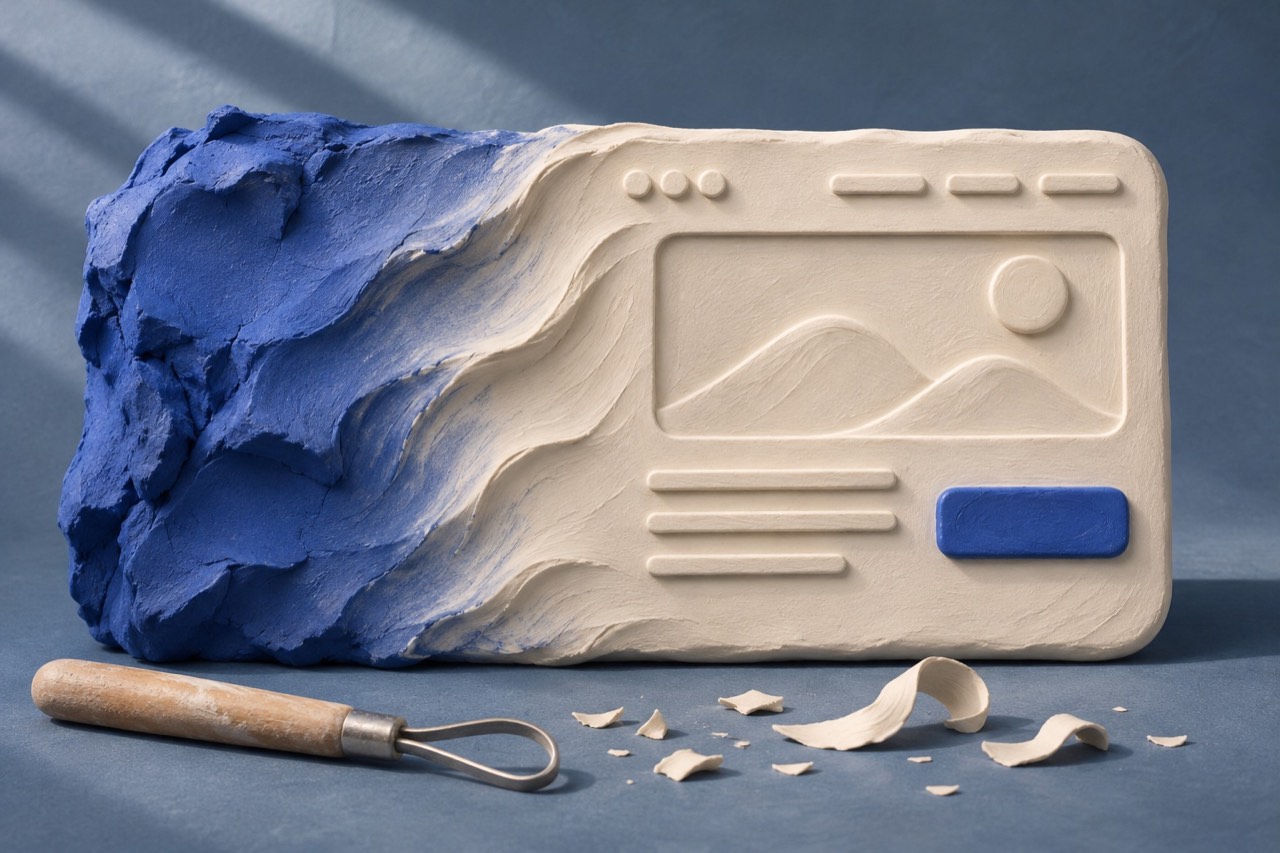
Starting with AI feels more like working with clay
Designing with AI starts the other way around, even though the process of shaping the page feels very similar. You describe what you want in a prompt and get a first version. Like working with clay, you already have material in front of you that you can start reshaping.
You can put references directly into the prompt. AI handles some of the implementation while you set the visual direction, choose what to keep and decide what the next version needs to achieve.
What changed after the design stage?
What I find interesting is how much AI has sped up the work that used to follow the design. Trying a complex interaction or animation often meant waiting for a developer to take over. Today, a designer can build a prototype in the browser and see straight away whether the interaction makes sense.
That makes experience in user experience design even more valuable. When you listen to users and understand what they’re trying to do, it’s easier to choose which possibilities are worth exploring.
Flash already showed us what happens when we overdo it
Remember Flash websites? Some were impressive, but you could spend more time waiting for an animation than looking for the information you came for. The same thing can happen today with heavy video, interactive graphics and animation.
A site built as a showcase can make more room for the visual experience. If it needs to generate enquiries or sales, people should be able to understand the offer and take the next step easily. That’s why SEO, speed and accessibility, including WCAG fundamentals, belong in the process from the first version.
Conclusion
AI shortened the path from an idea to a first version of a page. We can spend that time trying interactions and checking whether they help users. Good design still depends on understanding what someone came to the site to do.
Related services
We design and build clear websites that make it easy for visitors to enquire, book or buy.
Website design and development